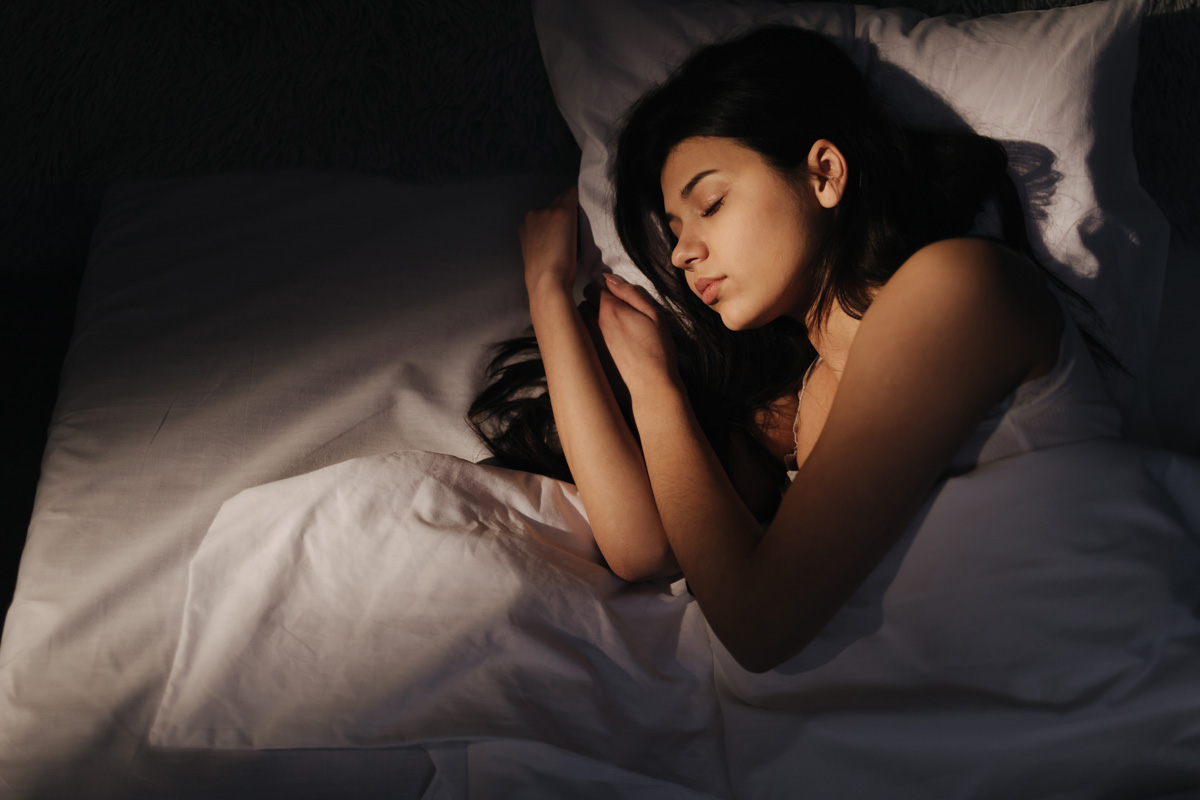

I asked googled how many hours women need to sleep per night. The answer was 7-9 hours on average. That number has increased slightly from the past, and the 6-8 hour per night recommendation that most of us are likely familiar with. Thats because the old numbers were actually based on mens’ needs. However, as best said by Stacy Sims, Ph.D., “Women are not small men.” Our requirements across the board are unique from a mans needs biologically and of course, different from one woman to the next as well.
However, old study discrepancies made me think it’s easy to see how, for instance, a male/ female couple may sleep together in the same bed at night, and he wakes feeling rested while she wakes feeling tired. This is because she biologically requires more sleep than her male counterpart. Unfortunately, that sleep deficit adds up in it’s effects over time. Eventually, the result seeps out to affect all areas of our lives and wellbeing. It’s affecting us, even if we don’t realize it. Many women have become so used to going without enough sleep, they may not directly associate it with seemingly ominous physical or emotional symptoms. Things like ongoing muscle fatigue or pain, digestive issues, brain fog, weight gain, hormonal imbalance, mood swings and ironically, severe sleep deficit can even can lead to difficulty sleeping when you continually lay down for less time than your body needs for a full recharge.
Believe me, I totally get it! It does seem that there are periods of our lives where we just cannot physically get enough sleep for one reason or another. For instance; Mothers (so often). Especially new mothers, who need the rest greatly. Or, who can relate to sharing the same bed with a person who snores? My hand is raised on that one! Or a scenario I’m very familiar with, the sleep deprived student. How many can relate with late night study for exams, or burning the midnight oil to meet deadlines for research papers and such? How about those of us who have long work commutes who leave early and get home late? The list goes on… And while there may be times in our lives where getting the optimal amount of sleep simply eludes us, we ought not give up all together on getting some Rest.
There is a difference between sleep and rest it’s true! And while rest is definitely not an even swap for sleep, it’s a close second! The goal of making enough time in our schedule to sleep for an adequate amount of time is absolutely, without a doubt, the ultimate goal. Thankfully, we have the knowledge from many sacred cultures who long ago figured out what modern science now confirms, that deeply resting can make a big difference in relaxing our nervous systems and enhancing our quality of life during periods when we’re off track, for whatever reason, with our optimal sleep habits.
By now you may be wondering; How can I get this special Rest she’s talking about? Well, you’re in luck because I’m going to tell you about my favorite ways to rest deeply when sleep is elusive.
My Top 5 Decompression Practices to Calm the Mind and Nervous System:
1. Legs up the Wall
I can tell you first hand, after working nearly 30 years in restaurant and hospitality; waiting tables, bartending, running cocktails late at night, cooking, catering, private chef work, you name it! The first thing I would do after work is come home, grab a glass of water, plop down on my bed, swing around and put my legs up the wall. I like lots of pillows under my legs so I can completely relax. I place my hands on my low belly and abdomen and take a few long deep breaths. I mostly try to think about nothing, but if that doesn’t work I begin to think about a bright white light that comes down from just above the crown of my head, down into my brain and travels slowly down my body until I’m completely relaxed. Soon, I feel like a marshmallow floating on a cloud of cotton pillows. I may fall asleep, or into a deep state of rest. I generally stay there for 45 minutes (at least) to an hour, and then either flip around and go to bed or get up and do whatever’s next in my day. Of course it depends upon the time of day or night it is. Whats great about this technique is it only requires two things, your body and the wall, or couch or chair or whatever you have. It can be done anytime and anywhere that suits you, for whatever length of time. I also love to rub horse-chestnut cream behind my knees and on my legs. This invigorates leg circulation and strengthens skin and blood vessel integrity (Planetary Formulas makes my favorite). The inverted position gives your body a change in gravity and allows the upper body, brain and organs to be more deeply nourished with blood. And best of all this posture promotes profound relaxation. I’ve found it also enhances leg appearance. I swear that this practice is the thing that kept me from getting varicose veins during all of those years of restaurant work!
2. Acupuncture
I think we all go through periods where our sleep cycle is off, or our quality of sleep is poor. For example maybe you’re tossing and turning at night. Or, maybe you’re able to fall asleep for a while then wake up. Perhaps you’re like me and are prone to super wild and vivid dreams that can wake me up. The first thing I do when my sleep is off track, is book an acupuncture appointment. I see an acupuncturist regularly anyway, but insomnia is definitely a reason I might book a treatment between regular sessions. Acupuncture helps re-adjust the body’s energy circulation into balance. The conditions that acupuncture can treat are endless. So, if you haven’t tried acupuncture ever, or haven’t been in a long time, it’s time to get acquainted!
3. Meditation
I personally find the best time to meditate is right away after I wake up in the morning. I’ve found it doesn’t have to be practiced in the perfect room with the right lighting and incense burning while I’m sitting on a cushion on the floor (although I love this vibe too). I’m going to be totally transparent and admit that I don’t even get out of bed. Which I know may not be ideal, but it’s doable for me. I just prop myself upright with pillows and start my Insight Timer (app). You see, if I get out of bed before meditating, the dogs get up and and then my partner wakes up, and then soon I’m up cooking breakfast and we’re well on our way into the morning routine. I’ve learned that prioritizing that 10 minutes in the morning is more important than the conditions being just right. And, that actively letting go of resistance is part of the practice too. The thing to keep in mind is to be gentle with ourselves and remember it’s “a practice.”
4. Yoga Nidra
This is a very deep relaxation practice in which one is guided by the voice of an instructor, either live or recorded. It can be done with or without audio guidance too, once you’re familiar with the process. I practice a version of Yoga Nidra when I use the white light image during my “legs up the wall” time, as described above. I’ve used Yoga Nidra recordings to guide me to sleep during times of insomnia. But ideally, this practice puts the nervous system deep at rest, however the person is not fully asleep nor awake. It is a place of deep relaxation between our conscious and sub-conscious mind, between what I call “waking and dreaming.” This is a topic I’ll discuss further in my article on Lucid Dreaming. I encourage clients to try several recordings and find ones that resonate with them as long as the voice is pleasing and length of time is appropriate. I have had many recordings from different teachers over the years. One who I recommend highly is Rod Stryker. I find him on my Spotify (search Yoga Nidra with Rod Stryker and theres lots of options there). For the practice of Yoga Nidra you’ll want to be lying down comfortably on the floor or bed. Have all the pillows and blankets you need, including a pillow for under the knees. Also have an eye mask or something to gently cover the eyes. I love aromatherapy so I sprits a bit of gardenia essential oil spray in the air and burn a smudge of palo santo stick. All one need do then is lay down, get comfy, push play and listen.
5. Relaxation and Sleep Apps
Electronics, are both a blessing and a curse right? Well, I have already mentioned two of my favorite apps in this article: Insight Timer (for meditation) and Spotify (for Yoga Nidra recordings). Having great apps enhance our modern lives in so many ways! Theres really no denying it. However, there’s a lot we can be looking at on the internet that isn’t calming our nervous systems or doing our busy, anxious minds any favors. There are ways we can shift our use of our devices to spend more time within apps that aim to enhance our wellbeing, rather than just captivate our mindless attention. I know people who use the Calm app. I use a white noise machine at home that goes all night and a white/gray/green noise app for when I travel.
Prioritizing Sleep
I think of a “desire” as a combination between a thought and a wish. Any desire we have for ourselves, such as improving our sleep habits or making more time for rest in our schedule, is launched like a rocket into space where the whole galaxy begins to conspire to meet our needs. There is always a way if we train our minds to think about what it is we do want, verses focusing on what the problem is. Ask, what’s the end goal? And begin to take baby steps towards it. Even if baby steps looks like going to bed 15 minutes earlier than usual. I take into account seasonal changes too. In the Summer I get up and take my fitness classes an hour earlier in the morning than I do in the Winter. I find my body simply needs extra rest during Fall and Winter. Small adjustments like these can make a big difference in how we feel!
I am totally sincere when I say, it’s really about adjusting priorities. In the sense that maybe sleep and self care time begin to be just as important, or more important, than saying yes to another activity. When we really lean in to understanding our bodies needs with more tenderness and mindfulness, the effort begins to pay off. It’s worth the short period of discomfort that comes when we make changes in our daily habits and lifestyle. For me, this looks like attending fewer social gatherings or only staying a couple of hours, and more time cuddling on the couch with my dog and a good magazine, a book, or a pad of paper. Another example is that more and more these days, I choose an non-alcoholic cocktail alternative like Recess or De Soi, instead of the hard kombucha that I adore, or whatever the beverage of choice may be.
I really have started to enjoy many of these adaptogenic alcohol substitute options that are available now! Some contain L-Theanine and other natural substances that can enhance mood and deepen relaxation. It’s been fun to try them. And, I can feel it the effects of them quickly! I will caution sensitive individuals that De Soi contains an herb (Gentian root) known in Chinese medicine to strongly smooth Liver Qi. If your acupuncturist has told you are a Spleen type and warns you against raw, cold foods, this particular herb can deplete energy stores over time. On the contrary if you are s wiry person who is always buzzing around and has trouble sitting still (Liver type) then this herb may do you a world of good! I suppose my best advice is to listen to your body as it gives you feedback on what you ingest.
Some days it’s kind of hard to admit that my system is so sensitive to things like caffeine and alcohol. Especially when I’m stressed and craving a drink! But, it’s my reality. The truth is I have a much easier time maintaining a positive mood, lessening anxiety, and staying on optimal sleep, food and exercise schedules when I don’t drink alcohol and I limit my caffeine intake. Even on weekends… I’m not 20 anymore and don’t need to party like it’s 1999!
I’m also a fan of occasional use of sleep enhancers such as melatonin, CBD, THC, Magnesium and others. There are many natural methods that help my clients get their sleep habits where they need to be. Again, listen to your body. The more often you do, the louder it will speak. Or, in other words the better you’ll get at trusting your instincts. And, it’s always a good idea to check in with your doctor or a qualified wellness professional if you have health concerns or questions about adding something new to your routine.
